
Influencer Marketing in India: How to Choose the Right Creators for Your Brand
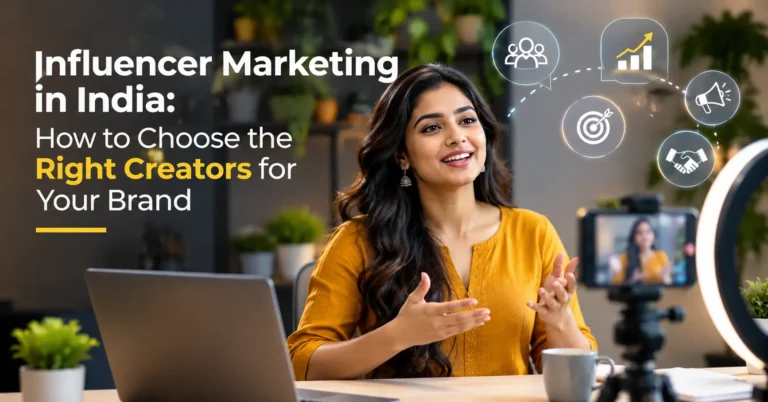
Influencer marketing and earned media get lumped together more often than they should. Both involve someone other than the brand talking about a product, which creates the impression they’re interchangeable tools serving the same goal. They’re not. Understanding where they diverge — and where they can genuinely work together — matters more for Indian brands right now than most influencer strategy conversations acknowledge.
The Core Distinction Worth Getting Right First
A journalist covering a company because there’s a genuine story is fundamentally different from a creator posting about a product because they’ve been paid to. Both can be valuable, but they carry different credibility signals to an audience, and increasingly, to search engines and AI tools evaluating a brand’s digital footprint. Conflating the two — or worse, presenting paid influencer content as if it carries the same independent credibility as earned coverage — erodes trust with audiences that have grown considerably more sophisticated about spotting the difference.
The practical implication: influencer marketing and PR should be planned as distinct, complementary workstreams, not treated as interchangeable tactics chosen based on whichever is cheaper or faster to execute that quarter.
What Influencer Marketing Actually Does Well
Creators bring reach and relatability into specific, often niche audience segments that traditional media coverage doesn’t always penetrate — particularly for consumer-facing brands where trust is built through relatable, everyday content rather than institutional credibility. A well-matched creator can drive genuine consideration and conversion in a way a business publication feature isn’t designed to.
This is a real strength, not a lesser version of PR. It’s simply a different tool, suited to different goals.
Choosing Creators: What Actually Matters
Audience alignment over follower count. A creator with a smaller but genuinely engaged, relevant audience typically outperforms one with a larger but loosely matched following. This is especially true for B2B or niche category brands, where a creator’s actual audience composition matters more than raw reach.
Authenticity of fit. Audiences notice when a creator is promoting something clearly outside their established content and credibility — a fitness creator suddenly endorsing enterprise software reads as an obvious paid placement, which undermines the endorsement’s value for everyone involved. The strongest influencer partnerships feel like a natural extension of what a creator already covers.
Content quality and past brand partnerships. Reviewing how a creator has handled previous brand collaborations — whether the content felt genuine or transparently transactional — is a better predictor of campaign quality than any single engagement metric.
Long-term relationships over one-off posts. A creator who genuinely uses and discusses a product over multiple pieces of content builds more credibility than a single sponsored post, which audiences increasingly recognize and discount accordingly.
Where Influencer Marketing and PR Genuinely Intersect
There is a legitimate connection point: creators who are also treated as credible voices — those who comment thoughtfully, get quoted in industry coverage, or have built real authority in a niche — sit closer to earned media territory than pure paid promotion, even when compensation is involved. Some of the most effective Indian brand campaigns blend the two deliberately — securing a creator’s genuine, credible commentary alongside traditional press coverage, rather than running both as siloed, disconnected efforts.
This requires clarity, though, about which is which. Disclosure and transparency about paid partnerships isn’t just a regulatory requirement in India — it’s increasingly what protects a brand’s broader credibility, including the credibility of its genuinely earned media coverage.
A Realistic Framing for Indian Brands
Influencer marketing and PR should be budgeted, planned, and measured separately, even when a brand chooses to run them in a coordinated way. Treating a creator partnership as a substitute for earned media coverage — or vice versa — misunderstands what each is actually built to deliver, and tends to underperform relative to a strategy that uses each for its genuine strength.
Wing Communications‘ core work sits in earned editorial media — coverage a journalist chooses to write, not paid placement — with influencer campaigns available as a distinct, separately scoped add-on for clients who want the two approaches coordinated as part of a broader visibility strategy, rather than blended together in ways that dilute what earned credibility actually means.
FAQs
A media coverage report summarizes a company’s press mentions, editorial features, interviews, founder quotes, and other media placements. A detailed report also evaluates coverage quality, publication relevance, visibility trends, backlinks, and potential business impact.
Start by reviewing publication quality rather than total article count. Then check whether coverage is earned or paid, assess the relevance of each story, compare founder and brand visibility, examine trends over time, and review backlinks and search performance.
Earned media is coverage gained through independent editorial interest, such as interviews, features, and expert quotes. Paid media includes sponsored articles, advertisements, and other placements purchased by a company. Both can support communications goals, but they should be reported separately.
A high number of placements does not necessarily indicate strong PR performance. Coverage in credible, relevant publications can provide more meaningful opportunities to build trust, establish expertise, and reach important stakeholders than numerous low-value or syndicated mentions.
Contact WingComm today to schedule a free strategy consultation and discover the right PR mix for your business.