
Why "Reach" Isn't the Right Metric for Influencer or Media Partnerships Credibility Is
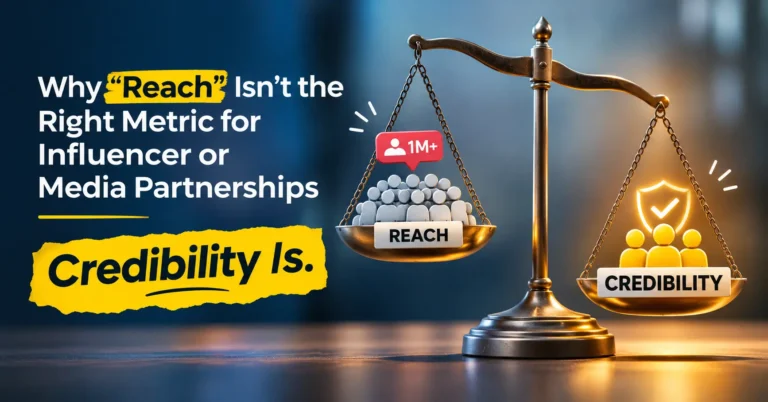
Every brand comparing influencer options eventually runs into the same debate: a handful of large creators with big audiences, or a wider spread of smaller ones with tighter, more engaged followings. The comparison usually gets framed purely in reach and cost-per-engagement terms. That framing misses the more important question, and it’s the same question that should be asked about media placements too — not how many people saw this, but how much did the people who saw it actually trust it.
Reach Without Trust Doesn't Convert
A macro influencer with millions of followers can generate impressive impression numbers on a campaign report. What that number often obscures is how much of that audience is genuinely engaged versus passively scrolling past sponsored content they’ve learned to filter out. Audiences — Indian audiences included — have become considerably more skilled at recognizing and discounting content that reads as transactional, regardless of how large the platform delivering it is.
This is the same dynamic that separates a wire-syndicated press release from a genuine editorial feature. Both technically count as “coverage.” Only one carries the independent credibility that actually shifts how a reader thinks about a brand
What Micro-Tier Creators Get Right
Smaller creators, with audiences in the tens of thousands rather than millions, typically maintain a closer, more trusted relationship with their followers — often because the audience feels the creator’s recommendations are still personal rather than a revenue stream running at scale. For niche or specialized categories particularly, a micro creator whose audience genuinely matches a brand’s target customer delivers a more credible endorsement than a macro creator whose audience is broad but loosely relevant.
The tradeoff is scale. A single micro creator partnership reaches fewer people than a macro one. The more accurate comparison isn’t one macro post against one micro post — it’s whether a brand is better served by concentrated reach with diluted trust, or distributed reach with stronger trust in each individual instance.
The Same Logic Applies to Media Placements
This exact tension shows up in earned media too, and it’s worth founders recognizing the parallel. A brand mention buried as one line in a broad roundup article at a large publication may technically reach more readers than a focused feature in a smaller, sector-specific trade publication — but the smaller feature, read by an audience of genuinely relevant investors, buyers, or industry peers, often does more real work for credibility and conversion than the larger but shallower mention.
Founders evaluating PR results by publication size or article count alone are making the same measurement mistake as brands choosing influencers purely by follower count — optimizing for a number that doesn’t reliably correlate with the trust actually being built.
What a Better Evaluation Framework Looks Like
Audience relevance over audience size. For both influencer and media partnerships, the more useful question is whether the actual audience reached matches the people a brand needs to influence — investors, enterprise buyers, category-relevant consumers — rather than the raw number of people technically exposed to the content.
Depth of engagement over impression counts. A creator or publication whose audience genuinely reads, comments, and acts on content is more valuable than one generating passive impressions, even at a fraction of the reach.
Consistency over one-off spikes. A single large placement or post creates a brief spike of attention that fades quickly. A pattern of smaller, well-matched placements — whether creator content or earned media — builds cumulative credibility that compounds, which single large moments rarely do on their own.
Downstream signal, not just immediate metrics. For both influencer and media work, what happens after the initial post or article — branded search increases, referral traffic, direct inquiries referencing the content — is often a better indicator of real impact than the reach number reported at the time.
A Practical Framing for 2026
Neither micro nor macro is universally better — the right choice depends on whether a brand needs broad awareness or targeted, credible influence within a specific audience. But brands defaulting to reach as the primary decision criterion, for influencers or media alike, are consistently undervaluing the smaller, sharper placements that often do more actual work.
Wing Communications applies this same credibility-first logic to its earned media strategy — prioritizing placements with genuine relevance and trust within a client’s actual target audience over raw publication size or coverage volume, with influencer partnerships available as a coordinated, separately scoped extension of that same principle.
FAQs
A media coverage report summarizes a company’s press mentions, editorial features, interviews, founder quotes, and other media placements. A detailed report also evaluates coverage quality, publication relevance, visibility trends, backlinks, and potential business impact.
Start by reviewing publication quality rather than total article count. Then check whether coverage is earned or paid, assess the relevance of each story, compare founder and brand visibility, examine trends over time, and review backlinks and search performance.
Earned media is coverage gained through independent editorial interest, such as interviews, features, and expert quotes. Paid media includes sponsored articles, advertisements, and other placements purchased by a company. Both can support communications goals, but they should be reported separately.
A high number of placements does not necessarily indicate strong PR performance. Coverage in credible, relevant publications can provide more meaningful opportunities to build trust, establish expertise, and reach important stakeholders than numerous low-value or syndicated mentions.
Contact WingComm today to schedule a free strategy consultation and discover the right PR mix for your business.