Founder PR: How to Position Yourself as an Industry Thought Leader
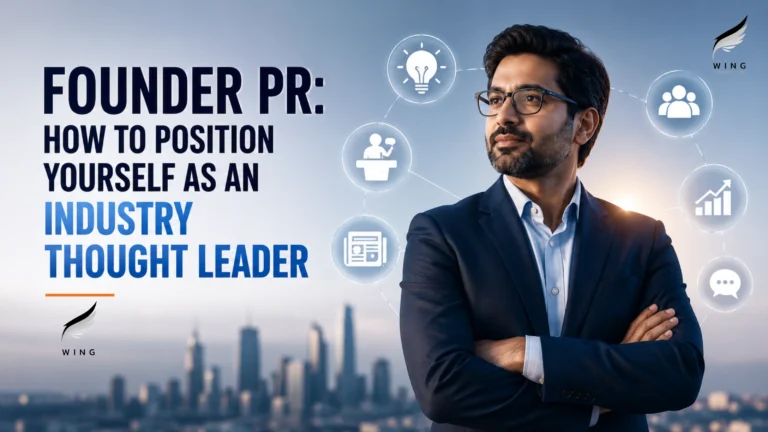
Every industry has a handful of founders whose names come up before their companies do. They get quoted first when a journalist needs an industry perspective, invited to speak first when a conference is building a panel, and trusted first when a difficult topic needs a credible voice. That position isn’t accidental — it’s built deliberately, often over years, through a specific set of PR choices most founders never make explicitly.
Here’s what actually goes into founder positioning, and where most founders get it wrong.
Thought Leadership Isn't the Same as Visibility
Being seen and being trusted as an authority are different things. A founder who posts frequently on LinkedIn or gets occasional press mentions has visibility. A founder who’s regularly sought out by journalists for perspective on industry shifts — independent of their own company’s news — has authority. The second is far more valuable, and far harder to build.
The distinction matters because many founders optimize for the wrong metric. Visibility without substance fades quickly. Authority compounds.
What Actually Builds Founder Authority
A consistent, specific point of view. Founders who get quoted repeatedly usually have a clear, sometimes contrarian perspective on something specific to their industry — not generic optimism about “the future of X.” A founder willing to say something genuinely opinionated about where their sector is headed, or what’s broken in it, becomes a more interesting source than one offering safe, agreeable commentary.
Authored articles over self-promotion. A well-placed byline in a relevant trade or business publication — written in first person, grounded in real experience rather than product pitching — does more for credibility than a dozen social posts. Publications value contributors who bring insight, not disguised marketing.
Being available as a source, not just a spokesperson. Founders who respond quickly and thoughtfully when journalists reach out for quotes on industry stories — even ones unrelated to their own company’s news — build the kind of relationship that leads to being called again. This requires being genuinely useful to a reporter, not just self-interested.
Speaking opportunities chosen strategically. Not every panel or conference builds authority. The ones that matter are where the audience and topic align with where a founder actually wants to be seen as credible — a fintech founder speaking on regulatory policy carries more weight than the same founder speaking generically about “startup journeys.”
Consistency over campaigns. Founder positioning that appears only around funding announcements looks exactly like what it is — promotional timing. Founders who maintain a visible, credible presence between major company milestones are the ones journalists and event organizers remember when they need a voice.
The India-Specific Context
Indian business media has a genuine appetite for founder perspective, particularly from leaders willing to comment on regulation, market structure, or sector-specific challenges — areas where a well-informed founder often has more useful insight than a generalist journalist could produce alone. This creates real opportunity, but it also means the bar for a “generic founder journey” story has risen considerably. Editors have seen enough of those.
Where Founders Undermine Their Own Positioning
The most common mistake is treating every media opportunity as a chance to mention the product. Journalists and editors notice this quickly, and it erodes the credibility a founder is trying to build. The founders who build the strongest reputations are often the ones who talk least about their own company and most about the industry they operate in — the company’s credibility follows as a byproduct.
The second mistake is inconsistency in message. A founder who positions themselves one way in one interview and differently in another creates confusion rather than authority. A clear, maintained narrative — even a narrow one — is more effective than a broad but inconsistent one.
The AI Layer
Founder authority increasingly extends beyond human readers. When AI tools are asked about a sector or a specific problem, they draw on published commentary and bylined perspective to shape their answers. A founder with a consistent, well-documented point of view across credible publications is more likely to be surfaced as a reference point in these AI-generated answers — a form of long-term visibility that compounds well beyond the original article.
Building It Deliberately
Founder positioning isn’t a single press hit or a viral LinkedIn post — it’s the accumulated effect of a consistent point of view, credible placements, and genuine usefulness to journalists over time.
Wing Communications works with founders on exactly this kind of long-term positioning — identifying the specific angle a founder can credibly own, and building the sustained media presence that turns a company leader into an industry reference point.
FAQs
Founder PR is the strategic use of media relations, thought leadership, interviews, bylines, speaking opportunities, and expert commentary to establish a founder as a credible authority in the
A founder can build thought leadership by developing a specific point of view, consistently sharing useful industry insights, contributing expert commentary, publishing credible bylines, and participating in relevant media and industry events.
Social media can increase visibility, but it does not automatically establish authority. Credible media coverage, expert commentary, published articles, and strategic speaking opportunities can provide stronger third-party validation.
Media interviews allow founders to demonstrate expertise beyond their own company. Regular, useful commentary can help journalists recognize the founder as a reliable source for industry perspectives.
An effective strategy combines a clear point of view, consistent messaging, relevant media opportunities, strong editorial content, timely responses to journalists, and long-term relationship building.
Contact WingComm today to schedule a free strategy consultation and discover the right PR mix for your business.