
Reputation Management 101: Protecting Your Brand Online in 2026
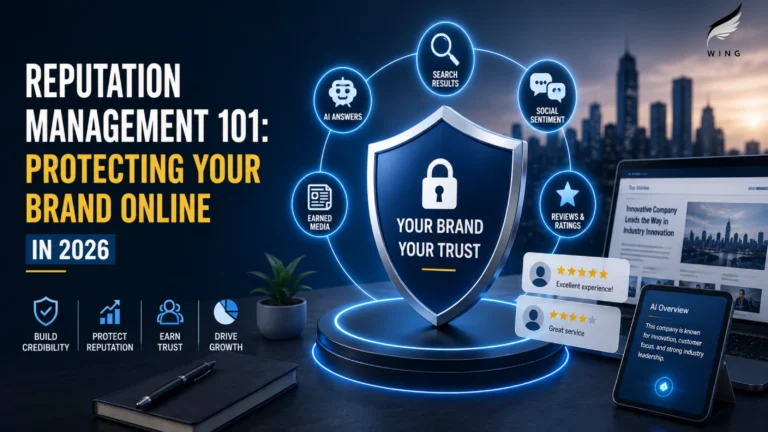
Reputation used to be something a company managed reactively — a crisis happened, a statement went out, and things moved on. That model is largely obsolete. In 2026, a company’s reputation is being shaped continuously, often by sources it doesn’t control: review platforms, social commentary, and increasingly, how AI tools summarize and represent a brand when someone asks about it. Waiting for a crisis to think about reputation is no longer a viable strategy.
Here’s a more realistic way to think about protecting a brand’s reputation today.
Reputation Is Now Built Before It's Tested
The companies that handle a crisis well are almost always the ones that had a credible public narrative before the crisis happened. A brand with years of transparent, earned media coverage has reserves of trust to draw on when something goes wrong. A brand with no public track record has nothing to fall back on — every negative story lands at full force because there’s no counterbalancing context.
This is the strongest argument for treating reputation management as an ongoing practice, not an emergency service. Consistent, credible visibility — through earned coverage, founder commentary, and transparent communication — is what actually protects a brand when it matters.
The New Surfaces Companies Need to Watch
Search results. What appears on the first page when someone searches a company or founder’s name is, for most people, the reputation. If that page is dominated by outdated news, unresolved complaints, or thin content, it shapes perception regardless of the underlying reality.
AI-generated answers. This is the newer and less understood risk. When someone asks ChatGPT, Perplexity, or Google’s AI Overviews about a company, the answer is drawn from whatever credible content exists about that brand — largely earned media coverage, structured web content, and consistent factual reporting. A company with sparse or outdated coverage risks being represented inaccurately, or not represented at all, in a space where an increasing number of people now do their research.
Review and rating platforms. For consumer-facing and B2B companies alike, aggregated sentiment on these platforms increasingly shapes early-stage trust, particularly for enterprise buyers doing quick vendor checks.
What Actually Protects a Brand
A steady base of earned coverage. This isn’t about volume for its own sake — it’s about ensuring that when someone looks up a company, there’s substantive, credible content beyond a thin corporate website. This is the single most effective long-term reputation asset a company can build.
Founder visibility that’s substantive, not promotional. A founder who’s been quoted credibly on industry trends, written thoughtful bylines, or spoken at relevant forums builds a reservoir of trust that protects both them and the company during difficult moments.
Transparent, timely response protocols. When something does go wrong — a service failure, a public complaint, a regulatory issue — the companies that handle it best respond quickly, factually, and without defensiveness. Silence or delay almost always makes a situation worse than the original issue.
Monitoring, not just messaging. Knowing what’s being said about a brand — across media, review platforms, and increasingly AI tools — before it becomes a larger issue is now a baseline requirement, not an advanced capability.
Where Indian Companies Commonly Get This Wrong
Many founders treat reputation management as something to activate only during a funding round or after a negative story breaks. Both are reactive postures. By the time a term sheet is being negotiated or a crisis is unfolding, there’s little time to build the credible track record that would have made either situation easier to navigate.
The other common gap is ignoring AI discoverability entirely. Most companies still think about reputation purely in terms of Google search and social sentiment, without recognizing that a growing share of research — by investors, journalists, and customers — now happens through AI tools that draw on a narrower, more specific set of credible sources.
A Practical Starting Point
Reputation management isn’t a single service — it’s the cumulative effect of consistent, credible visibility over time, paired with the discipline to respond well when something goes wrong. Companies that build this steadily are far better positioned than those trying to construct it under pressure.
Wing Communications approaches reputation this way — through sustained earned media presence, founder positioning, and AI discoverability strategy working together, rather than treating reputation as a service reserved for crisis moments.
FAQs
Reputation management is the ongoing process of monitoring, building, and protecting how a company or founder is perceived across search engines, media, review platforms, social channels, and AI-powered search tools.
Reputation is shaped continuously across multiple digital channels. Search results, reviews, social conversations, news coverage, and AI-generated answers can all influence how customers, investors, and partners perceive a brand.
Consistent, credible earned media creates a strong public record around a company. This provides useful context and credibility when customers, journalists, investors, or other stakeholders research the brand.
Companies should monitor reviews consistently, respond promptly and professionally, address legitimate concerns, and avoid defensive or misleading responses. A consistent flow of genuine positive customer experiences can also strengthen overall reputation.
AI reputation management focuses on understanding and improving how AI-powered tools represent a company when users ask about its brand, products, founders, or industry. Strong third-party coverage and consistent factual information can help provide better context.
Contact WingComm today to schedule a free strategy consultation and discover the right PR mix for your business.