What Does a PR Agency Actually Do? A Beginner's Guide for Founders
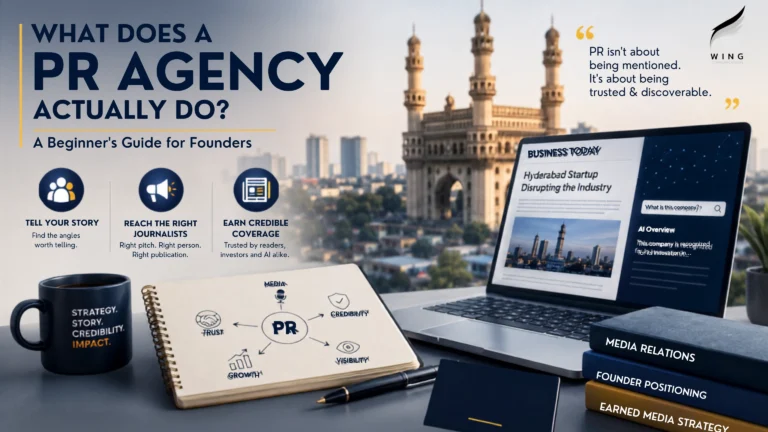
Most first-time founders have a vague idea of what PR involves — something about getting mentioned in the news. Few understand what actually happens between hiring an agency and seeing a byline appear in a business publication. That gap in understanding leads to mismatched expectations, and often, disappointment with an otherwise competent agency.
Here’s a more grounded picture of what PR actually is, and isn’t.
PR Is Not Advertising
The first distinction worth making: PR is not a media buy. An advertorial is paid space — a company writes it, pays for placement, and controls every word. An earned editorial article is different. A journalist decides it’s worth covering, writes it in their own voice, and retains editorial control. That’s what gives earned coverage its credibility — readers, investors, and increasingly search engines and AI tools, treat it differently from sponsored content.
A PR agency’s core job is to make a company’s story compelling enough that a journalist chooses to tell it. That’s a fundamentally different skill from buying placement.
What a PR Agency Actually Does, Week to Week
Story development. Before any outreach happens, an agency has to figure out what’s actually newsworthy about a company. A product launch alone rarely qualifies. A founder’s unusual background, an underreported industry trend the company sits inside, a genuinely differentiated approach to a known problem — these are the angles journalists respond to. Good agencies spend real time here, not just packaging existing marketing copy.
Media relationship management. Journalists get dozens of pitches a day. An agency with real relationships — knowing which reporter at which publication actually covers a company’s sector, and what they’ve written recently — has a materially better chance of a response than one sending generic mass pitches.
Founder positioning. For most early and growth-stage companies, the founder is more interesting to media than the company itself. Building a founder’s visibility through authored articles, panel appearances, and quote opportunities in trade and business publications is now a distinct workstream, separate from corporate brand coverage.
Press release strategy and wire distribution. Not every announcement warrants a press release, and not every press release warrants premium wire distribution. Part of an agency’s value is knowing which milestones justify which level of push — and being transparent that wire syndication (pickups across a distribution network) is different from earned editorial coverage in a publication a journalist actually chose to write for.
Ongoing narrative consistency. PR isn’t a single campaign around a funding round. The companies that build real reputational equity treat it as a continuous practice — steady coverage over 12 to 18 months builds far more credibility than a single spike of attention.
Reporting and measurement. A competent agency tracks what’s published, where, and shares it transparently — including being honest when a pitch didn’t land, rather than inflating a report with tangential mentions.
Where AI Discoverability Fits In
There’s a newer layer most founders haven’t yet connected to PR: how a company shows up when someone asks ChatGPT, Perplexity, or Google’s AI Overviews about it. These systems draw on published, credible content — largely the same earned media coverage that traditional PR produces. A company with strong products but almost no editorial footprint is, in effect, invisible to these tools. This is quickly becoming as relevant to a founder’s diligence process as SEO was a decade ago.
What PR Cannot Do
It’s worth saying plainly: no legitimate PR agency can guarantee a specific journalist will publish a specific story. Editorial discretion is real. What a good agency can guarantee is disciplined outreach, relevant story angles, and consistent effort — and should be transparent about the difference between guaranteed pitching and guaranteed publication.
A Practical Starting Point
For founders exploring this for the first time, the useful question isn’t “how many articles will I get this month.” It’s “does this agency understand my sector well enough to find a story a journalist would actually want to write.”
Wing Communications works with founders across sectors — from deep-tech and fintech to healthcare and logistics — with that as the starting filter, treating earned coverage, founder positioning, and AI discoverability as parts of one continuous practice rather than separate services. For most founders, that reframing — from “getting mentioned” to “building a credible, discoverable narrative over time” — is the real starting point for thinking about PR.
FAQs
A PR agency helps businesses build and maintain a positive public image through media relations, strategic communications, reputation management, thought leadership, digital PR, and brand storytelling
Yes. Marketing focuses on promoting products and generating sales, while PR focuses on building credibility, trust, and long-term relationships with customers, media, and stakeholders
Absolutely. PR helps startups establish credibility, attract investors, gain media attention, and build trust with potential customers from an early stage.
PR is a long-term strategy. While some campaigns generate immediate media coverage, building brand authority and reputation typically takes several months of consistent effort.
Yes. Digital PR earns high-quality backlinks, increases brand mentions, and enhances online authority, all of which can contribute to improved search engine rankings.
Contact WingComm today to schedule a free strategy consultation and discover the right PR mix for your business.