mangalam singh

Custom Website Development: What Every Growing Brand Needs to Know

Custom Website Development: What Every Growing Brand Needs to Know

A company’s website is often the first genuinely thorough impression it makes — arriving after a press mention, a referral, or a search, and expected to confirm in seconds what the earlier touchpoint suggested. Yet many growing Indian brands are still running on templated builds chosen for speed at an earlier stage, never revisited as the company’s ambitions outgrew them. Knowing when and how to move to a custom build is a decision worth making deliberately, not reactively.

Why "Custom" Matters More at Growth Stage

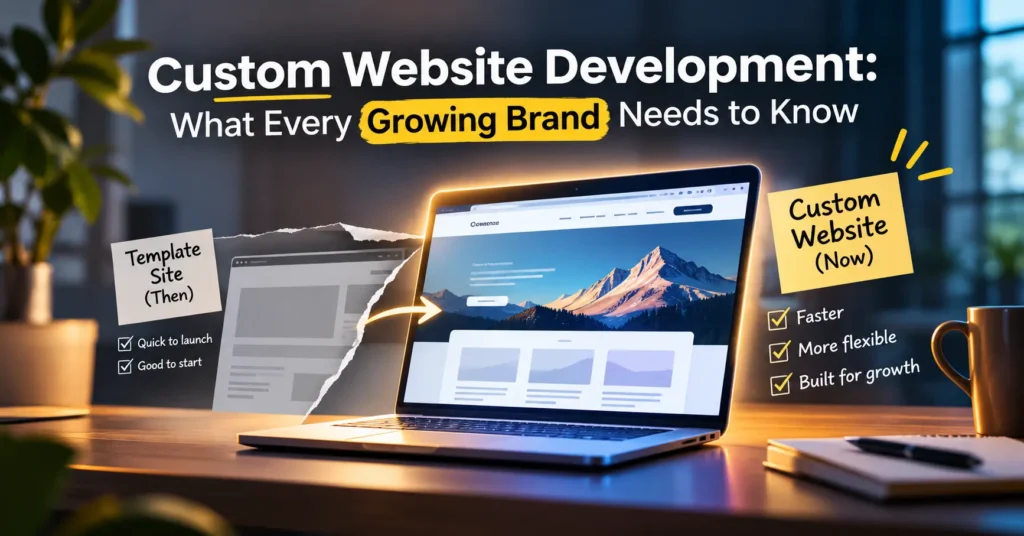
Early-stage companies reasonably default to templated platforms — fast to launch, low cost, sufficient for validating an idea. The calculus changes once a company has real traction. A templated site starts showing its limits in ways that matter commercially: slower load times as content grows, rigid design constraints that make it hard to reflect an evolving brand, and technical ceilings on integrations — CRM connections, analytics depth, custom functionality — that a growing company increasingly needs.

Custom development solves for the specific needs of the business rather than the generic needs of “a website,” which is precisely the gap that starts to show once a brand has outgrown its first build.

What Actually Matters in a Custom Build

Performance from the ground up. Site speed directly affects both user experience and search ranking. A custom build allows deliberate control over what loads, how, and when — something templated platforms with heavy third-party plugin dependencies often can’t optimize as cleanly.

Scalable architecture. A growing brand’s needs six months from launch rarely match its needs at launch. Custom development done properly anticipates this — building a structure that can absorb new content types, additional pages, and evolving functionality without requiring a rebuild each time the company changes.

Design that reflects actual brand positioning. Templated themes, however well-chosen, carry inherent visual similarity to every other site built on the same theme. For a brand investing in distinct positioning — through PR, founder visibility, or market differentiation — a website that looks interchangeable with competitors undercuts that investment. Custom design closes this gap.

Technical SEO built in properly. Clean code structure, proper schema markup, and sensible information architecture are considerably easier to implement correctly in a custom build than to retrofit onto a templated site loaded with plugins built for general use rather than a specific company’s structure.

Integration flexibility. As companies mature, they typically need their website to connect cleanly with CRM systems, marketing automation, analytics stacks, and sometimes internal tools. Custom builds are generally easier to integrate deeply, compared to templated platforms that often require workaround plugins with their own limitations.

Where Growing Brands Get This Wrong

Rebuilding before it’s actually necessary. Not every growing company needs a full custom build immediately — sometimes a well-executed redesign on an existing platform solves the immediate problem more efficiently. The decision should follow a genuine audit of specific limitations being hit, not a general sense that the current site “looks dated.”

Treating the website as a one-time project. A custom build isn’t a finished asset — it requires ongoing maintenance, security updates, and periodic content and structural updates as the company evolves. Companies that treat launch as the finish line often find the site drifting out of date within a year or two.

Underinvesting in the pages that carry the most weight

FAQs

A media coverage report summarizes a company’s press mentions, editorial features, interviews, founder quotes, and other media placements. A detailed report also evaluates coverage quality, publication relevance, visibility trends, backlinks, and potential business impact.

Start by reviewing publication quality rather than total article count. Then check whether coverage is earned or paid, assess the relevance of each story, compare founder and brand visibility, examine trends over time, and review backlinks and search performance.

Earned media is coverage gained through independent editorial interest, such as interviews, features, and expert quotes. Paid media includes sponsored articles, advertisements, and other placements purchased by a company. Both can support communications goals, but they should be reported separately.

A high number of placements does not necessarily indicate strong PR performance. Coverage in credible, relevant publications can provide more meaningful opportunities to build trust, establish expertise, and reach important stakeholders than numerous low-value or syndicated mentions.

Contact WingComm today to schedule a free strategy consultation and discover the right PR mix for your business.

Custom Website Development: What Every Growing Brand Needs to Know Read More »
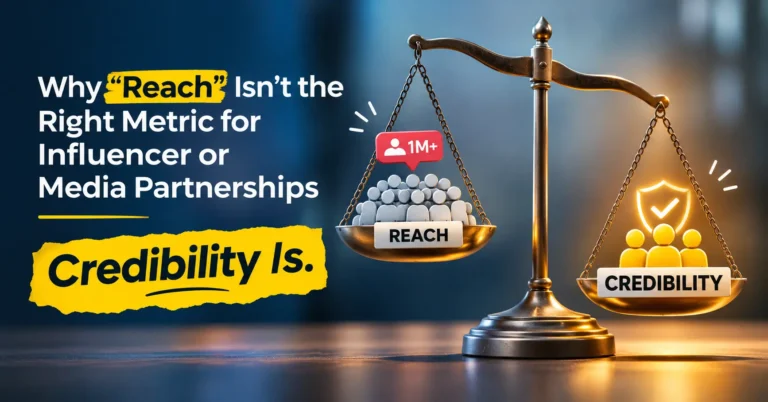
Why “Reach” Isn’t the Right Metric for Influencer or Media Partnerships Credibility Is

Why "Reach" Isn't the Right Metric for Influencer or Media Partnerships Credibility Is

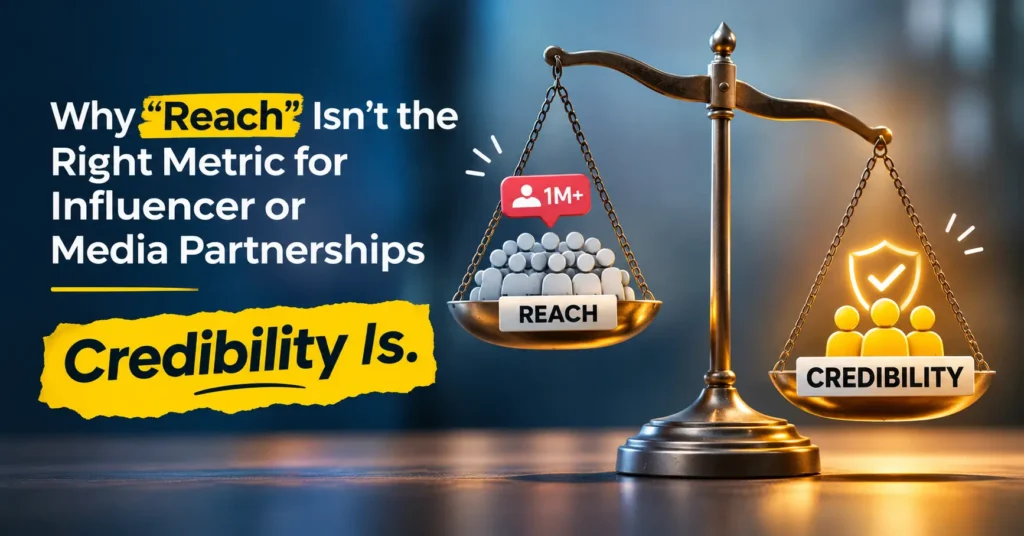
Every brand comparing influencer options eventually runs into the same debate: a handful of large creators with big audiences, or a wider spread of smaller ones with tighter, more engaged followings. The comparison usually gets framed purely in reach and cost-per-engagement terms. That framing misses the more important question, and it’s the same question that should be asked about media placements too — not how many people saw this, but how much did the people who saw it actually trust it.

Reach Without Trust Doesn't Convert

A macro influencer with millions of followers can generate impressive impression numbers on a campaign report. What that number often obscures is how much of that audience is genuinely engaged versus passively scrolling past sponsored content they’ve learned to filter out. Audiences — Indian audiences included — have become considerably more skilled at recognizing and discounting content that reads as transactional, regardless of how large the platform delivering it is.

This is the same dynamic that separates a wire-syndicated press release from a genuine editorial feature. Both technically count as “coverage.” Only one carries the independent credibility that actually shifts how a reader thinks about a brand

What Micro-Tier Creators Get Right

Smaller creators, with audiences in the tens of thousands rather than millions, typically maintain a closer, more trusted relationship with their followers — often because the audience feels the creator’s recommendations are still personal rather than a revenue stream running at scale. For niche or specialized categories particularly, a micro creator whose audience genuinely matches a brand’s target customer delivers a more credible endorsement than a macro creator whose audience is broad but loosely relevant.

The tradeoff is scale. A single micro creator partnership reaches fewer people than a macro one. The more accurate comparison isn’t one macro post against one micro post — it’s whether a brand is better served by concentrated reach with diluted trust, or distributed reach with stronger trust in each individual instance.

The Same Logic Applies to Media Placements

This exact tension shows up in earned media too, and it’s worth founders recognizing the parallel. A brand mention buried as one line in a broad roundup article at a large publication may technically reach more readers than a focused feature in a smaller, sector-specific trade publication — but the smaller feature, read by an audience of genuinely relevant investors, buyers, or industry peers, often does more real work for credibility and conversion than the larger but shallower mention.

Founders evaluating PR results by publication size or article count alone are making the same measurement mistake as brands choosing influencers purely by follower count — optimizing for a number that doesn’t reliably correlate with the trust actually being built.

What a Better Evaluation Framework Looks Like

Audience relevance over audience size. For both influencer and media partnerships, the more useful question is whether the actual audience reached matches the people a brand needs to influence — investors, enterprise buyers, category-relevant consumers — rather than the raw number of people technically exposed to the content.

Depth of engagement over impression counts. A creator or publication whose audience genuinely reads, comments, and acts on content is more valuable than one generating passive impressions, even at a fraction of the reach.

Consistency over one-off spikes. A single large placement or post creates a brief spike of attention that fades quickly. A pattern of smaller, well-matched placements — whether creator content or earned media — builds cumulative credibility that compounds, which single large moments rarely do on their own.

Downstream signal, not just immediate metrics. For both influencer and media work, what happens after the initial post or article — branded search increases, referral traffic, direct inquiries referencing the content — is often a better indicator of real impact than the reach number reported at the time.

A Practical Framing for 2026

Neither micro nor macro is universally better — the right choice depends on whether a brand needs broad awareness or targeted, credible influence within a specific audience. But brands defaulting to reach as the primary decision criterion, for influencers or media alike, are consistently undervaluing the smaller, sharper placements that often do more actual work.

Wing Communications applies this same credibility-first logic to its earned media strategy — prioritizing placements with genuine relevance and trust within a client’s actual target audience over raw publication size or coverage volume, with influencer partnerships available as a coordinated, separately scoped extension of that same principle.

FAQs

A media coverage report summarizes a company’s press mentions, editorial features, interviews, founder quotes, and other media placements. A detailed report also evaluates coverage quality, publication relevance, visibility trends, backlinks, and potential business impact.

Start by reviewing publication quality rather than total article count. Then check whether coverage is earned or paid, assess the relevance of each story, compare founder and brand visibility, examine trends over time, and review backlinks and search performance.

Earned media is coverage gained through independent editorial interest, such as interviews, features, and expert quotes. Paid media includes sponsored articles, advertisements, and other placements purchased by a company. Both can support communications goals, but they should be reported separately.

A high number of placements does not necessarily indicate strong PR performance. Coverage in credible, relevant publications can provide more meaningful opportunities to build trust, establish expertise, and reach important stakeholders than numerous low-value or syndicated mentions.

Contact WingComm today to schedule a free strategy consultation and discover the right PR mix for your business.

Why “Reach” Isn’t the Right Metric for Influencer or Media Partnerships Credibility Is Read More »

Influencer Marketing in India: How to Choose the Right Creators for Your Brand

Influencer Marketing in India: How to Choose the Right Creators for Your Brand

Influencer marketing and earned media get lumped together more often than they should. Both involve someone other than the brand talking about a product, which creates the impression they’re interchangeable tools serving the same goal. They’re not. Understanding where they diverge — and where they can genuinely work together — matters more for Indian brands right now than most influencer strategy conversations acknowledge.

The Core Distinction Worth Getting Right First

A journalist covering a company because there’s a genuine story is fundamentally different from a creator posting about a product because they’ve been paid to. Both can be valuable, but they carry different credibility signals to an audience, and increasingly, to search engines and AI tools evaluating a brand’s digital footprint. Conflating the two — or worse, presenting paid influencer content as if it carries the same independent credibility as earned coverage — erodes trust with audiences that have grown considerably more sophisticated about spotting the difference.

The practical implication: influencer marketing and PR should be planned as distinct, complementary workstreams, not treated as interchangeable tactics chosen based on whichever is cheaper or faster to execute that quarter.

What Influencer Marketing Actually Does Well

Creators bring reach and relatability into specific, often niche audience segments that traditional media coverage doesn’t always penetrate — particularly for consumer-facing brands where trust is built through relatable, everyday content rather than institutional credibility. A well-matched creator can drive genuine consideration and conversion in a way a business publication feature isn’t designed to.

This is a real strength, not a lesser version of PR. It’s simply a different tool, suited to different goals.

Choosing Creators: What Actually Matters

Audience alignment over follower count. A creator with a smaller but genuinely engaged, relevant audience typically outperforms one with a larger but loosely matched following. This is especially true for B2B or niche category brands, where a creator’s actual audience composition matters more than raw reach.

Authenticity of fit. Audiences notice when a creator is promoting something clearly outside their established content and credibility — a fitness creator suddenly endorsing enterprise software reads as an obvious paid placement, which undermines the endorsement’s value for everyone involved. The strongest influencer partnerships feel like a natural extension of what a creator already covers.

Content quality and past brand partnerships. Reviewing how a creator has handled previous brand collaborations — whether the content felt genuine or transparently transactional — is a better predictor of campaign quality than any single engagement metric.

Long-term relationships over one-off posts. A creator who genuinely uses and discusses a product over multiple pieces of content builds more credibility than a single sponsored post, which audiences increasingly recognize and discount accordingly.

Where Influencer Marketing and PR Genuinely Intersect

There is a legitimate connection point: creators who are also treated as credible voices — those who comment thoughtfully, get quoted in industry coverage, or have built real authority in a niche — sit closer to earned media territory than pure paid promotion, even when compensation is involved. Some of the most effective Indian brand campaigns blend the two deliberately — securing a creator’s genuine, credible commentary alongside traditional press coverage, rather than running both as siloed, disconnected efforts.

This requires clarity, though, about which is which. Disclosure and transparency about paid partnerships isn’t just a regulatory requirement in India — it’s increasingly what protects a brand’s broader credibility, including the credibility of its genuinely earned media coverage.

A Realistic Framing for Indian Brands

Influencer marketing and PR should be budgeted, planned, and measured separately, even when a brand chooses to run them in a coordinated way. Treating a creator partnership as a substitute for earned media coverage — or vice versa — misunderstands what each is actually built to deliver, and tends to underperform relative to a strategy that uses each for its genuine strength.

Wing Communications‘ core work sits in earned editorial media — coverage a journalist chooses to write, not paid placement — with influencer campaigns available as a distinct, separately scoped add-on for clients who want the two approaches coordinated as part of a broader visibility strategy, rather than blended together in ways that dilute what earned credibility actually means.

FAQs

A media coverage report summarizes a company’s press mentions, editorial features, interviews, founder quotes, and other media placements. A detailed report also evaluates coverage quality, publication relevance, visibility trends, backlinks, and potential business impact.

Start by reviewing publication quality rather than total article count. Then check whether coverage is earned or paid, assess the relevance of each story, compare founder and brand visibility, examine trends over time, and review backlinks and search performance.

Earned media is coverage gained through independent editorial interest, such as interviews, features, and expert quotes. Paid media includes sponsored articles, advertisements, and other placements purchased by a company. Both can support communications goals, but they should be reported separately.

A high number of placements does not necessarily indicate strong PR performance. Coverage in credible, relevant publications can provide more meaningful opportunities to build trust, establish expertise, and reach important stakeholders than numerous low-value or syndicated mentions.

Contact WingComm today to schedule a free strategy consultation and discover the right PR mix for your business.

Influencer Marketing in India: How to Choose the Right Creators for Your Brand Read More »

YouTube as a Discoverability Channel: What It Actually Adds to a Brand’s Media Presence

YouTube as a Discoverability Channel: What It Actually Adds to a Brand's Media Presence

Most brand conversations about YouTube start with a growth playbook — subscriber targets, algorithm optimization, thumbnail testing. That’s a legitimate discipline, but it’s a different one from what most founders actually need YouTube for at an early or growth stage: not building a media channel from scratch, but using video as another surface where a brand’s existing narrative and credibility show up consistently.

Why YouTube Matters Beyond Subscriber Counts

For most B2B and founder-led brands, YouTube isn’t primarily a discovery engine competing with entertainment content. It’s increasingly a credibility and discoverability surface — a place where a founder’s interviews, panel appearances, and media commentary can be archived, searched, and surfaced, both by human viewers and by AI tools that increasingly reference video content alongside written coverage.

A company with no YouTube presence effectively has no home for the media appearances, conference talks, and interview clips that already exist elsewhere — scattered across a journalist’s channel, a conference organizer’s archive, or lost entirely once the original posting context fades from relevance.

What This Looks Like Done Realistically

Centralizing existing appearances, not manufacturing new content constantly. A founder who’s done a handful of credible media interviews, panel discussions, or conference talks over a year already has real content. Uploading and organizing this consistently on a branded channel turns scattered appearances into a coherent, searchable record of the founder’s positioning — without requiring an in-house video production team.

Treating it as an archive of credibility, not a content marketing engine. The strongest use case for most growth-stage companies isn’t producing original YouTube content from scratch — it’s ensuring that when someone searches a founder’s name or the company’s name on YouTube, or when an AI tool references video sources, there’s something substantive and on-brand to find, rather than nothing at all.

Keeping it connected to the same narrative discipline as everything else. A YouTube channel that tells a different version of the company story than the press coverage, the website, or the founder’s social presence undermines the consistency that makes any of it credible. Video content should reinforce the same positioning being built through earned media, not exist as a disconnected side project.

Where This Story Should Actually Be Told

YouTube is the second-largest search engine globally, and Google increasingly surfaces video results within standard search queries — meaning a founder or brand with a well-organized channel has another route into search visibility beyond written content and articles. For AI discoverability specifically, video transcripts and descriptions are increasingly part of the content pool these systems draw from, particularly when the video itself features credible commentary or interview content rather than purely promotional material.

This makes YouTube presence less about competing for organic subscriber growth and more about ensuring completeness — that a brand’s digital footprint isn’t missing an entire content format that both human researchers and AI tools increasingly check.

What This Isn't

This isn’t a case for every company building an ambitious YouTube content strategy with weekly original programming — that’s a genuine, resource-intensive discipline requiring dedicated production capability most growth-stage companies don’t have and don’t need yet. The realistic starting point is far simpler: making sure the credible video content that already exists about a company or founder has a proper, consistently branded home, rather than staying scattered or absent.

A Practical Starting Point

Before investing in YouTube growth tactics, the more useful audit is simpler: does a search for the founder’s or company’s name on YouTube currently return anything substantive, or nothing at all? For most companies without a channel, the answer is the latter — a gap worth closing, even modestly, before considering more ambitious content strategy.

Wing Communications offers YouTube channel management as part of its broader discoverability work — organizing and uploading a client’s existing media appearances and interviews into a consistent, searchable channel that reinforces the same narrative built through earned press, rather than running it as a separate content production function.

FAQs

A media coverage report summarizes a company’s press mentions, editorial features, interviews, founder quotes, and other media placements. A detailed report also evaluates coverage quality, publication relevance, visibility trends, backlinks, and potential business impact.

Start by reviewing publication quality rather than total article count. Then check whether coverage is earned or paid, assess the relevance of each story, compare founder and brand visibility, examine trends over time, and review backlinks and search performance.

Earned media is coverage gained through independent editorial interest, such as interviews, features, and expert quotes. Paid media includes sponsored articles, advertisements, and other placements purchased by a company. Both can support communications goals, but they should be reported separately.

A high number of placements does not necessarily indicate strong PR performance. Coverage in credible, relevant publications can provide more meaningful opportunities to build trust, establish expertise, and reach important stakeholders than numerous low-value or syndicated mentions.

Contact WingComm today to schedule a free strategy consultation and discover the right PR mix for your business.

YouTube as a Discoverability Channel: What It Actually Adds to a Brand’s Media Presence Read More »

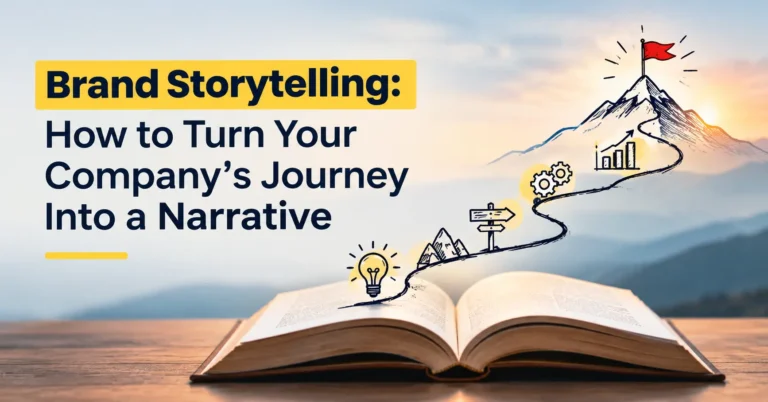
Brand Storytelling: How to Turn Your Company’s Journey Into a Narrative

Brand Storytelling: How to Turn Your Company's Journey Into a Narrative

Every founder believes their company’s origin story is interesting. Most of the time, they’re wrong — not because the underlying facts aren’t real, but because “we started in a garage and now we’re growing fast” is a structure, not a story. Journalists have read thousands of versions of it. The founders who get real narrative traction are the ones who understand the difference between a company history and a story worth telling.

Why Most Founder Narratives Fall Flat

The default version of most company stories follows the same arc: identified a problem, built a solution, faced early struggles, achieved growth. That structure isn’t wrong, but it’s generic enough to apply to almost any company, which is exactly why it rarely gets picked up by credible media. A journalist isn’t looking for confirmation that a founder worked hard and believed in their idea — that’s assumed. They’re looking for something specific: an unusual detail, a genuine tension, a perspective that couldn’t have come from anyone else’s company

What Actually Makes a Story Work

Specificity over sentiment. “We wanted to make healthcare more accessible” says nothing distinctive. “We built this after watching a specific inefficiency cost a hospital real money, and realized the industry’s existing tools were solving the wrong problem” gives a journalist something concrete to write about. The more specific the detail, the more credible and memorable the story becomes — vague inspiration is forgettable; a precise observation is quotable.

Genuine tension, not just triumph. Stories built entirely around smooth success read as marketing, because real company-building rarely is. A founder willing to talk honestly about a wrong turn, a difficult pivot, or a genuine unresolved challenge produces a far more credible and engaging narrative than one that only presents polished outcomes. This doesn’t mean manufacturing conflict — it means not editing out the real difficulty that shaped the company.

A perspective on the industry, not just the company. The strongest founder narratives connect a company’s specific story to a broader observation about their sector — what’s changing, what’s broken, what most people in the industry are missing. This reframes the story from “here’s what we built” to “here’s what we learned about this industry while building it,” which is a fundamentally more interesting angle for a journalist and their readers.

A throughline that holds across every telling. A company’s story shouldn’t shift meaningfully depending on the audience — an investor pitch, a press interview, a customer-facing narrative, and a hiring pitch should all trace back to the same core story, even if emphasis shifts. Founders who tell a different version each time erode the credibility any single version could have built.

Where This Story Should Actually Be Told

A strong narrative loses most of its value if it only lives in an “About Us” page nobody reads. The real work is placing it where it earns third-party credibility — a founder profile in a business publication, a feature story that lets a journalist tell the narrative in their own words, an authored piece where the founder connects their journey to a broader industry insight. Each of these carries a trust signal a company’s own website copy structurally cannot replicate.

Getting the Story Right Before Pitching It

A common mistake is pitching journalists before the narrative itself is sharp. A vague or overly broad story gets a vague or absent response. The more useful sequence is refining the story internally first — identifying the specific angle, the concrete details, the genuine tension — and only then approaching media, rather than hoping a journalist will find the sharp version buried in a generic pitch

The Indian Business Media Context

Indian business publications have genuine appetite for founder stories that connect to larger market or sector narratives — India’s evolving startup ecosystem, shifts in specific industries, the operational realities of building in a market with particular regulatory or infrastructure challenges. A founder story anchored to one of these broader threads tends to land better than an isolated company narrative with no wider relevance.

Building It Deliberately

A company’s story isn’t something to write once and reuse indefinitely. It’s something to refine deliberately — sharpened through genuine specificity, honest tension, and a clear connection to something larger than the company itself — and then placed where it can earn the credibility a founder actually needs.

Wing Communications works with founders to develop this kind of narrative before pursuing media placement, ensuring the story pitched to journalists is sharp enough to earn genuine editorial interest, not just another founder journey piece.

FAQs

A media coverage report summarizes a company’s press mentions, editorial features, interviews, founder quotes, and other media placements. A detailed report also evaluates coverage quality, publication relevance, visibility trends, backlinks, and potential business impact.

Start by reviewing publication quality rather than total article count. Then check whether coverage is earned or paid, assess the relevance of each story, compare founder and brand visibility, examine trends over time, and review backlinks and search performance.

Earned media is coverage gained through independent editorial interest, such as interviews, features, and expert quotes. Paid media includes sponsored articles, advertisements, and other placements purchased by a company. Both can support communications goals, but they should be reported separately.

A high number of placements does not necessarily indicate strong PR performance. Coverage in credible, relevant publications can provide more meaningful opportunities to build trust, establish expertise, and reach important stakeholders than numerous low-value or syndicated mentions.

Contact WingComm today to schedule a free strategy consultation and discover the right PR mix for your business.

Brand Storytelling: How to Turn Your Company’s Journey Into a Narrative Read More »

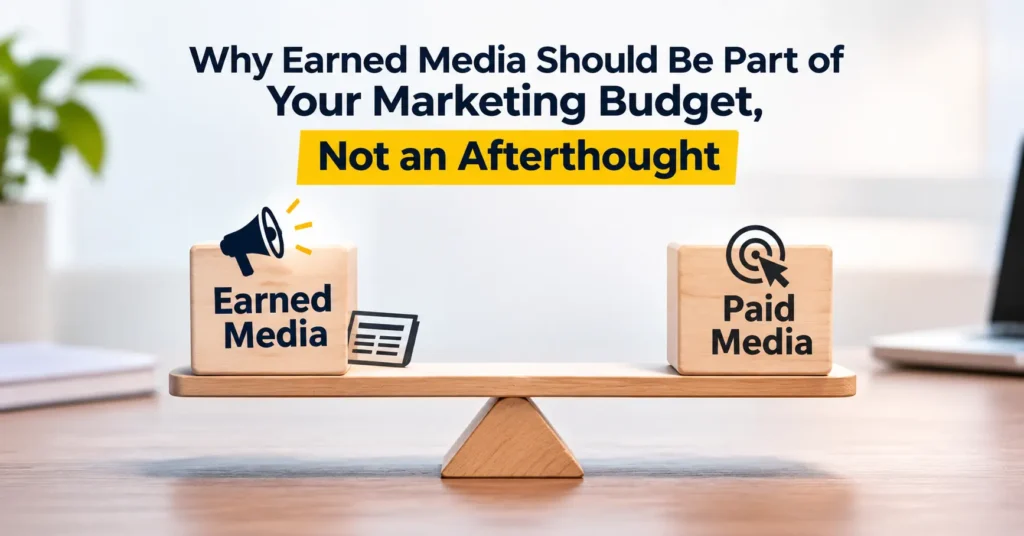
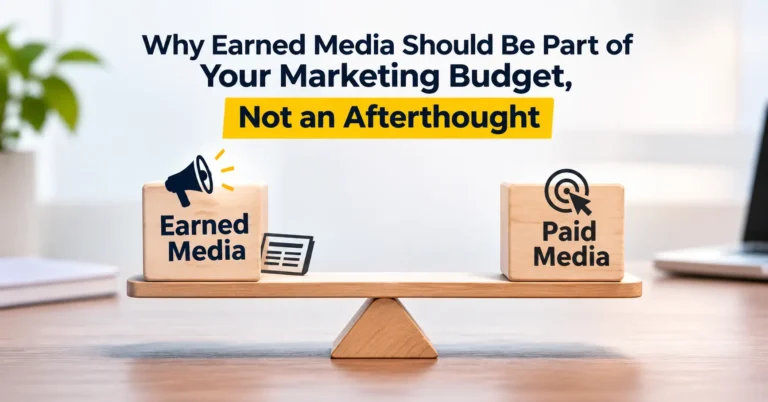
Why Earned Media Should Be Part of Your Marketing Budget, Not an Afterthought

Why Earned Media Should Be Part of Your Marketing Budget, Not an Afterthought

Ask most growing Indian companies to break down their marketing budget, and PR is usually one of two things: a small discretionary line item, or entirely absent until something goes wrong and a crisis response is suddenly needed urgently. Meanwhile, paid social and performance advertising typically absorb the majority of spend, treated as the default engine of growth. That allocation reflects habit more than strategy — and it’s increasingly costing companies more than it needs to.

Why This Allocation Pattern Persists

Paid advertising is easy to justify in a budget conversation. It has a dashboard, a clear cost-per-result, and a familiar logic — spend more, get more reach. PR doesn’t offer that same immediate, attributable feedback loop, which makes it harder to defend in a planning meeting, even when its actual business impact is significant. The result is a systemic underinvestment in earned media, not because it doesn’t work, but because it’s harder to justify in the same spreadsheet logic as a paid campaign.

What Gets Missed When PR Is an Afterthought

Rising paid acquisition costs, with no counterbalance. Costs per click and cost per lead have climbed steadily across most competitive Indian categories. Companies relying almost entirely on paid channels are increasingly paying more for the same results, with no complementary channel building the kind of trust that makes an ad convert better in the first place. Earned coverage does exactly that — a prospective customer or investor who’s already encountered a company through credible press is measurably easier to convert than one encountering the brand cold through an ad.

No credibility reserve when it’s needed most. Companies that treat PR as crisis-only find themselves building a public narrative from scratch under pressure — during a funding round, a leadership transition, or an actual crisis — precisely when there’s no time to build it properly. A modest, consistent PR investment beforehand means there’s already a credible track record to draw on when it matters.

Weaker compounding effects. Paid advertising results largely stop the moment spend stops. Earned media compounds — a strong piece of coverage continues generating backlink value, search visibility, and referenceable credibility long after the initial placement. Budgets that don’t account for this differential tend to systematically undervalue PR relative to its longer-term return.

What a More Balanced Allocation Looks Like

There’s no universal formula, since it depends heavily on stage and goals — a company chasing immediate lead volume genuinely needs more weighted toward performance channels than one building toward a funding round or enterprise sales credibility. But the useful shift for most growing Indian brands is moving PR from a discretionary, ad hoc line item to a planned, consistent monthly allocation — even a modest one — rather than a bucket that only gets funded when there’s budget left over from paid campaigns.

A retainer-based PR engagement, planned quarterly alongside paid spend, allows a company to build earned credibility steadily rather than in the sporadic bursts that come from treating it as an afterthought.

The AI Discoverability Argument for Budgeting This Properly

There’s a newer, forward-looking reason this allocation matters. Paid advertising has no bearing on how a brand is represented in AI-generated search and answer tools — those systems draw on credible, published third-party content, which is precisely what earned media produces and what advertising cannot. A company investing heavily in paid acquisition but nothing in earned coverage may find itself increasingly invisible in a research channel that a growing share of investors, enterprise buyers, and customers now use before making a decision.

A Practical Starting Point

The point isn’t to abandon paid social or performance advertising — both remain legitimate, necessary tools for many growth goals. The point is recognizing that a marketing budget with no planned allocation for earned media is building growth on a single, increasingly expensive channel, with no credibility infrastructure supporting it.

Wing Communications works with growing Indian brands to build PR into the marketing budget as planned, ongoing infrastructure — not a crisis response or a leftover line item — so earned credibility compounds alongside, rather than after, paid growth efforts.

FAQs

A media coverage report summarizes a company’s press mentions, editorial features, interviews, founder quotes, and other media placements. A detailed report also evaluates coverage quality, publication relevance, visibility trends, backlinks, and potential business impact.

Start by reviewing publication quality rather than total article count. Then check whether coverage is earned or paid, assess the relevance of each story, compare founder and brand visibility, examine trends over time, and review backlinks and search performance.

Earned media is coverage gained through independent editorial interest, such as interviews, features, and expert quotes. Paid media includes sponsored articles, advertisements, and other placements purchased by a company. Both can support communications goals, but they should be reported separately.

A high number of placements does not necessarily indicate strong PR performance. Coverage in credible, relevant publications can provide more meaningful opportunities to build trust, establish expertise, and reach important stakeholders than numerous low-value or syndicated mentions.

Contact WingComm today to schedule a free strategy consultation and discover the right PR mix for your business.

Why Earned Media Should Be Part of Your Marketing Budget, Not an Afterthought Read More »

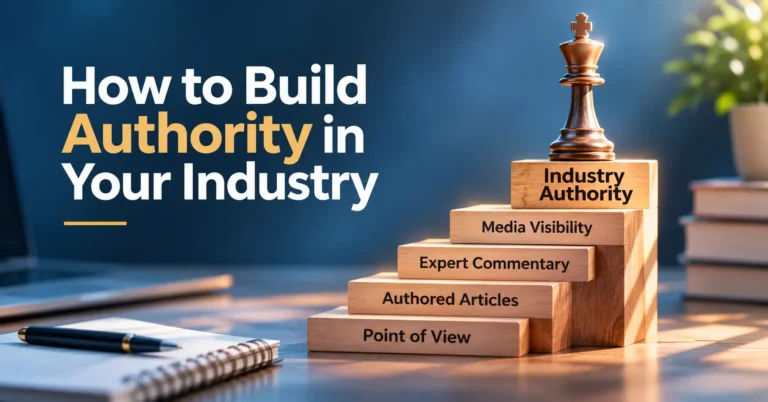
Thought Leadership Content: How to Build Authority in Your Industry

Thought Leadership Content: How to Build Authority in Your Industry

The term “thought leadership” has been diluted by overuse — applied to everything from a mildly insightful LinkedIn post to a genuinely original industry perspective. That dilution matters, because it’s made founders skeptical of the term while still needing exactly what it’s supposed to describe: genuine authority that makes an industry pay attention when a founder speaks. Building that authority requires more discipline than most content calendars account for.

What Thought Leadership Actually Requires

Real thought leadership starts with a specific, defensible point of view — not a restatement of consensus wisdom, and not generic optimism about an industry’s future. A founder saying “AI will transform healthcare” says nothing distinctive. A founder saying “most healthcare AI tools fail not because of the technology but because they’re built without understanding clinical workflow” says something worth engaging with, agreeing with, or arguing against — which is precisely the reaction genuine thought leadership is supposed to produce.

This distinction is where most content strategies go wrong. They optimize for volume and consistency before they’ve established substance, producing a steady stream of content that’s professionally written but says very little that couldn’t have come from any other founder in the category.

Building the Foundation Before the Content

Identify what you actually know that others don’t. Every founder has some genuine, hard-won insight from building their company — a pattern they’ve observed, a mistake they’ve made and corrected, a counterintuitive lesson about their market. This is usually more specific and more valuable than founders initially think, because it’s easy to underestimate knowledge that’s become second nature.

Pick a narrow enough lane. Thought leadership that tries to cover an entire industry broadly ends up sounding generic. The founders who build real authority usually own a specific, narrower angle within their space — a particular problem, a specific stakeholder’s pain point, a specific inefficiency — and go deep there consistently, rather than commenting broadly on everything happening in their sector.

Be willing to take a position that isn’t universally comfortable. Genuinely differentiated thought leadership sometimes means disagreeing publicly with a popular industry narrative, or pointing out something uncomfortable about how a sector operates. Founders who only ever say agreeable, safe things rarely get remembered as authorities — they get politely ignored.

Where This Content Should Actually Live

Authored articles in credible publications, not just owned channels. A byline in a relevant trade or business publication carries a credibility that a company blog post structurally cannot — because a third-party editor decided it was worth publishing, which readers register even if unconsciously. This is where PR and content strategy intersect directly: securing these placements is a media relations skill, not just a writing exercise.

Speaking opportunities matched to the specific point of view, not any available panel. A founder with a sharp perspective on a niche problem is better served speaking at a smaller, focused industry forum than a large generic startup conference where the message gets diluted among unrelated topics.

Consistent commentary as a source, not just a contributor. Being available and quotable when journalists are writing about relevant industry developments — not just when a company has its own news — builds the pattern of being treated as a genuine industry reference, which compounds far more than isolated bylines.

Where This Compounds

Thought leadership content that’s genuinely substantive doesn’t just build a founder’s reputation among human readers. It also becomes part of the credible published record that AI tools draw on when constructing answers about an industry or a specific problem — meaning a founder with a consistent, well-documented point of view is more likely to surface as a reference point in AI-generated research, a form of durable visibility that compounds well beyond any single article’s original readership.

Building It Properly

Thought leadership isn’t a content format — it’s the output of a founder having something genuinely worth saying, said consistently, in places with enough editorial credibility to matter. Skipping the substance and going straight to content production is why most thought leadership efforts feel forgettable.

Wing Communications works with founders to identify that defensible point of view first, then builds the sustained media placements — authored articles, quote positioning, and speaking opportunities — that turn a genuine perspective into recognized industry authority

FAQs

A media coverage report summarizes a company’s press mentions, editorial features, interviews, founder quotes, and other media placements. A detailed report also evaluates coverage quality, publication relevance, visibility trends, backlinks, and potential business impact.

Start by reviewing publication quality rather than total article count. Then check whether coverage is earned or paid, assess the relevance of each story, compare founder and brand visibility, examine trends over time, and review backlinks and search performance.

Earned media is coverage gained through independent editorial interest, such as interviews, features, and expert quotes. Paid media includes sponsored articles, advertisements, and other placements purchased by a company. Both can support communications goals, but they should be reported separately.

A high number of placements does not necessarily indicate strong PR performance. Coverage in credible, relevant publications can provide more meaningful opportunities to build trust, establish expertise, and reach important stakeholders than numerous low-value or syndicated mentions.

Contact WingComm today to schedule a free strategy consultation and discover the right PR mix for your business.

Thought Leadership Content: How to Build Authority in Your Industry Read More »

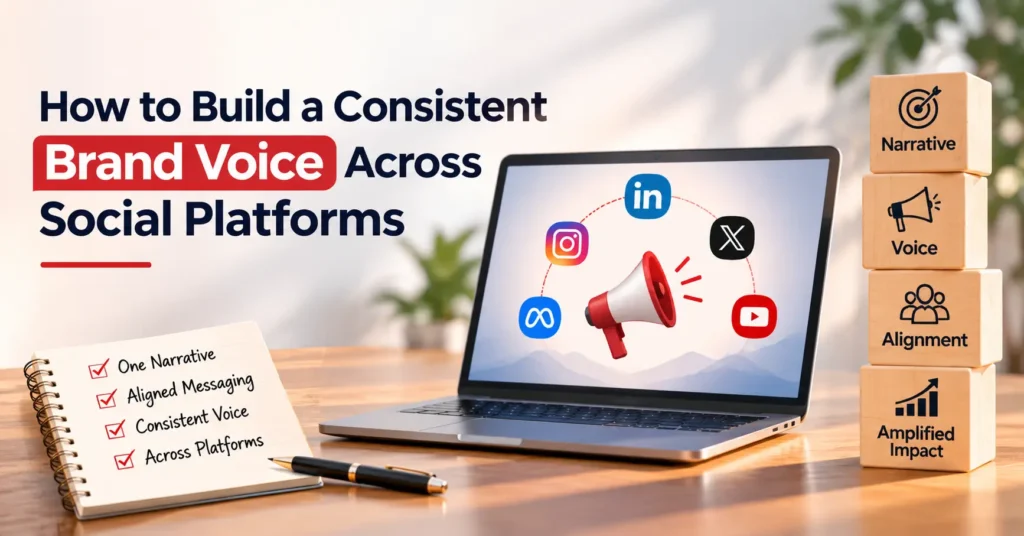
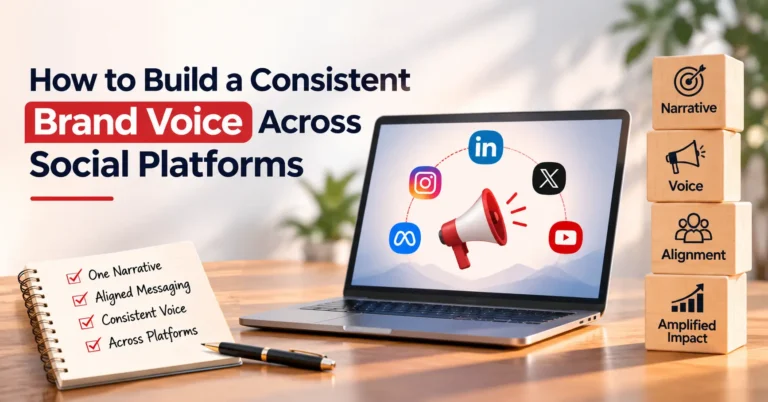
How to Build a Consistent Brand Voice Across Social Platforms

How to Build a Consistent Brand Voice Across Social Platforms

Most conversations about brand voice start with tone — casual or formal, playful or serious. That’s the surface layer. The deeper problem most companies actually have isn’t tone inconsistency; it’s narrative inconsistency — a brand that sounds fine on any single platform but tells a slightly different story about itself depending on where you encounter it. That’s a communications problem before it’s a social media problem, and it’s usually rooted in how a company’s core messaging was built in the first place.

Voice Follows Narrative, Not the Other Way Around

A common mistake is treating brand voice as a style guide exercise — approved adjectives, sentence length preferences, an emoji policy. Useful, but downstream of a bigger question: what is this company’s actual story, and does everyone writing on its behalf understand it the same way? A precise tone applied to an unclear or shifting narrative just produces consistently confusing content.

The companies with genuinely coherent brand voice usually have a clear point of origin — a founder narrative, a specific market position, a defined problem the company exists to solve — that every piece of content, regardless of platform or format, traces back to. Voice consistency is really narrative discipline wearing a stylistic coat.

Where Indian Brands Commonly Fragment

Different teams, no shared source material. Social media, PR, and content marketing are frequently run by separate people or separate vendors with limited coordination. A founder’s carefully positioned narrative from a media interview doesn’t make it into the social team’s content brief, so the LinkedIn post ends up telling a slightly different, less precise version of the same story.

Reactive posting without a reference point. Teams under pressure to post consistently often generate content in the moment, disconnected from the company’s actual established positioning — resulting in technically on-brand tone but strategically off-message content.

Founder voice versus company voice, unreconciled. Many Indian companies run both a founder’s personal presence and a company account, often with different people managing each, and no clear alignment on which narrative points belong where. Audiences following both notice the disconnect, even if they can’t articulate exactly what feels off.

Building It Properly

Start from earned narrative, not a style guide. The most reliable source for a consistent brand voice is the story that’s already been tested and validated externally — through media coverage, founder interviews, and press positioning. If a founder’s narrative has already been refined through genuine media conversations, that refined version should anchor everything else, rather than each platform inventing its own framing independently.

Create one shared reference document, not separate briefs per platform. A single source — core positioning, key messages, founder’s established point of view, language to avoid — should inform social content, PR pitches, and website copy alike. Platform-specific formatting can vary; the underlying narrative shouldn’t.

Treat founder and brand voice as connected, not identical. A founder’s personal voice can be more opinionated and informal than a corporate account’s, but the substance — the positioning, the point of view on the industry — should align. Divergence in tone is fine. Divergence in narrative is a problem.

Audit before adding more content. Before producing more social content, it’s worth reviewing what’s already out there — across the company page, the founder’s profile, recent press coverage — and checking whether it tells one coherent story or several competing ones. Most brands are surprised by how much drift has accumulated without anyone noticing in real time.

Why This Matters Beyond Social Media

A consistent narrative doesn’t just make a brand look more polished — it directly affects how the brand is understood by search engines and AI tools evaluating consistency across sources. A company that’s described one way in press coverage, another way on its own social channels, and a third way in its website copy makes it harder for these systems to form a clear, accurate picture — which increasingly shapes how a brand is represented in AI-generated answers about it.

Google’s Organization structured data guidelines provide additional context on how clearly identifying an organisation helps search engines understand its identity.

A Practical Starting Point

Brand voice consistency isn’t primarily a content calendar problem. It’s a narrative alignment problem that shows up on content calendars. Getting the underlying story right — and making sure PR, founder positioning, and social content are all drawing from the same source — solves the tone inconsistency almost as a byproduct.

Research from the Nielsen Norman Group on tone of voice also highlights how communication tone influences perceptions of brand trustworthiness and desirability.

Wing Communications approaches this by anchoring a client’s social and public-facing voice in the same core narrative built through earned media and founder positioning work — so a brand sounds like one consistent story, whether encountered in a press feature, a founder’s post, or a company update.

FAQs

A media coverage report summarizes a company’s press mentions, editorial features, interviews, founder quotes, and other media placements. A detailed report also evaluates coverage quality, publication relevance, visibility trends, backlinks, and potential business impact.

Start by reviewing publication quality rather than total article count. Then check whether coverage is earned or paid, assess the relevance of each story, compare founder and brand visibility, examine trends over time, and review backlinks and search performance.

Earned media is coverage gained through independent editorial interest, such as interviews, features, and expert quotes. Paid media includes sponsored articles, advertisements, and other placements purchased by a company. Both can support communications goals, but they should be reported separately.

A high number of placements does not necessarily indicate strong PR performance. Coverage in credible, relevant publications can provide more meaningful opportunities to build trust, establish expertise, and reach important stakeholders than numerous low-value or syndicated mentions.

Contact WingComm today to schedule a free strategy consultation and discover the right PR mix for your business.

How to Build a Consistent Brand Voice Across Social Platforms Read More »

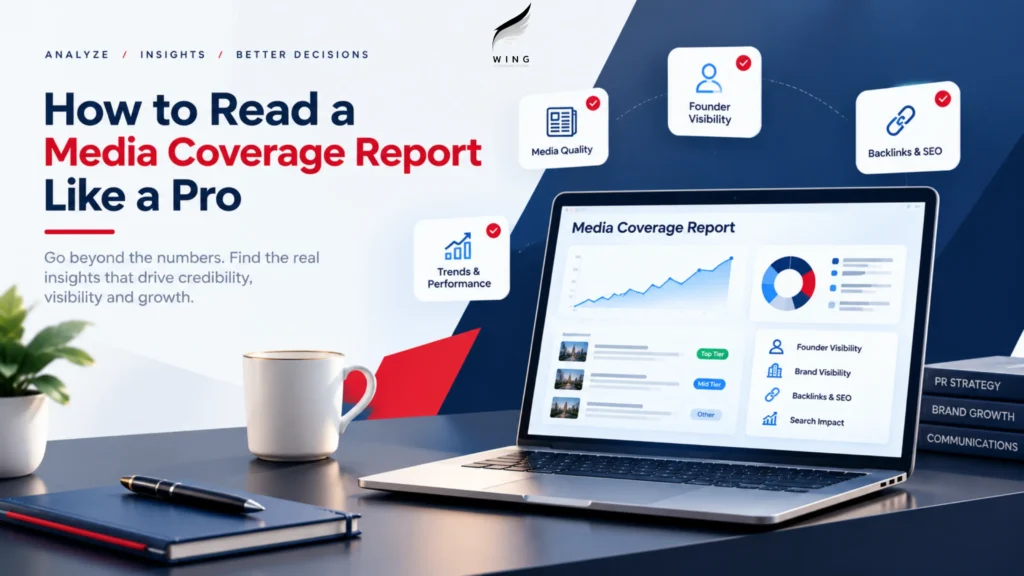
How to read a media coverage report using analytics dashboards to evaluate media quality, brand visibility, backlinks, and PR performance.

How to Read a Media Coverage Report Like a Pro

How to Read a Media Coverage Report Like a Pro

How to read a media coverage report using analytics dashboards to evaluate media quality, brand visibility, backlinks, and PR performance.

Most founders receive a monthly PR report, skim the article count, and move on. That’s a missed exercise. A well-built coverage report holds more useful information than a headline number — about which stories are actually working, where the gaps are, and whether the PR investment is compounding or plateauing. Reading it properly takes a few extra minutes and a slightly different lens than most founders bring to it.

Start With Tier, Not Volume

The first instinct is usually to look at total placements. Resist that. The more useful first question is: what tier were these placements? A report showing twelve pieces of coverage means very little without knowing how many were genuine editorial features in credible business publications versus wire syndication pickups, which are a different thing entirely — distribution, not independent editorial judgment. A report that blends both categories into a single “coverage” number without distinguishing them is worth questioning.

Check Whether Coverage Is Earned or Placed

Related, but distinct: confirm what’s earned editorial versus what’s paid or sponsored content, if the report includes both. These serve different purposes and shouldn’t be presented as equivalent. A credible agency report should make this distinction clear on its own — if it doesn’t, ask directly. Learn more about media relations and earned press coverage.

Look at the Angle, Not Just the Outlet

A placement in a well-known publication still needs scrutiny on what the story actually says. Was the company or founder positioned as a genuine source of insight, quoted meaningfully within a larger story? Or was the mention a passing reference, technically counted as coverage but contributing little to actual positioning? Outlet prestige alone doesn’t tell the full story — the substance of the piece does.

Track Founder Visibility Separately From Brand Visibility

These are related but distinct workstreams, and a good report separates them. Founder-focused coverage — bylines, quotes, panel mentions — builds a different kind of asset than brand-focused feature stories. A report that only tracks brand mentions may be missing whether founder positioning, often the more durable asset, is actually progressing. Explore leadership PR and founder brand building for more information.

Watch the Trend, Not the Single Month

A single month’s numbers are close to meaningless in isolation. PR compounds — the value of month six’s coverage builds on the credibility established in months one through five. A useful report, reviewed properly, gets compared against the prior quarter, not just read in isolation. A dip in one month against a strong prior quarter is a different story than a dip against a consistently weak trend.

Ask About What Didn't Land

A transparent report should be honest about pitches that went out but didn’t result in coverage — not just what succeeded. This is a genuine signal of effort and story quality, even when it doesn’t show up as a placement. An agency that only reports wins, with no visibility into outreach volume or what was pitched and passed on, makes it hard to judge whether the strategy is sound or just intermittently lucky. Learn more about what a PR agency does and the importance of transparent PR reporting.

Check for Backlink and Search Signal, Not Just Media Mentions

A more sophisticated report increasingly includes what the coverage did beyond the article itself — whether it produced a credible backlink, whether it correlates with branded search increases, whether it’s likely to be picked up by AI tools drawing on published, credible content when someone asks about the company or its category. These downstream signals are becoming as relevant as the placement itself.

Businesses can use Google Search Console to review search impressions and clicks, and follow Google’s SEO Starter Guide to understand search visibility fundam

What a Strong Report Actually Looks Like

The most useful coverage reports don’t just list links. They tier the coverage, separate founder and brand visibility, show trend over time rather than isolated snapshots, disclose what didn’t work alongside what did, and connect coverage to its downstream effects on search and discoverability. A founder who knows to ask for this level of detail gets far more strategic value out of the same reporting relationship than one who just checks the article count each month.

Wing Communications structures its monthly reporting around exactly this level of detail — tiered coverage, founder and brand visibility tracked separately, and downstream backlink and discoverability signal — because a report a founder can actually read and act on is worth more than one that just counts links. Explore Wing Communications and its SEO services to learn more about connecting media coverage with search visibility and long-term brand authority.

FAQs

A media coverage report summarizes a company’s press mentions, editorial features, interviews, founder quotes, and other media placements. A detailed report also evaluates coverage quality, publication relevance, visibility trends, backlinks, and potential business impact.

Start by reviewing publication quality rather than total article count. Then check whether coverage is earned or paid, assess the relevance of each story, compare founder and brand visibility, examine trends over time, and review backlinks and search performance.

Earned media is coverage gained through independent editorial interest, such as interviews, features, and expert quotes. Paid media includes sponsored articles, advertisements, and other placements purchased by a company. Both can support communications goals, but they should be reported separately.

A high number of placements does not necessarily indicate strong PR performance. Coverage in credible, relevant publications can provide more meaningful opportunities to build trust, establish expertise, and reach important stakeholders than numerous low-value or syndicated mentions.

Contact WingComm today to schedule a free strategy consultation and discover the right PR mix for your business.

How to Read a Media Coverage Report Like a Pro Read More »

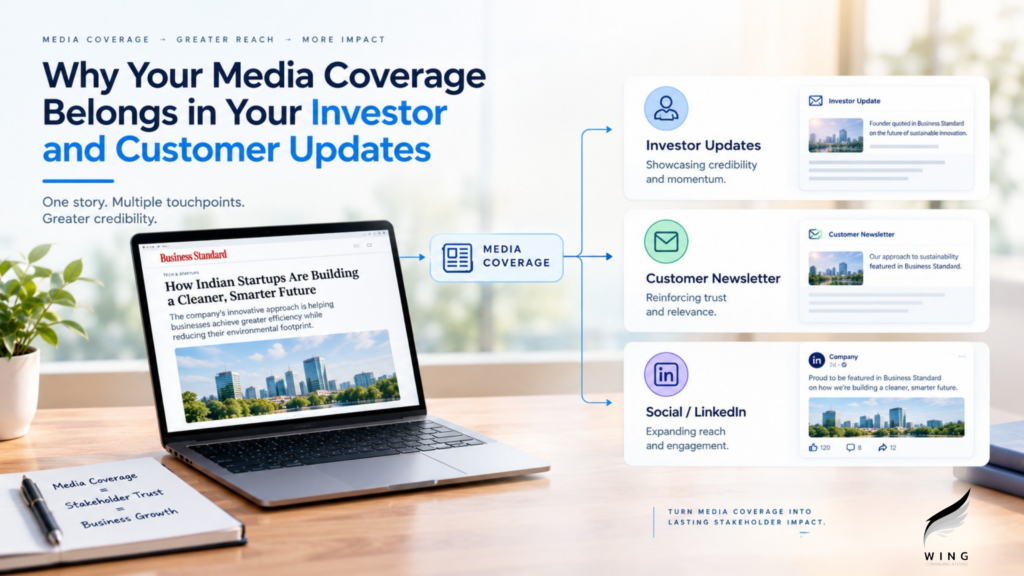
How companies can use media coverage in investor updates and customer newsletters to build credibility and stakeholder trust.

Why Your Media Coverage Belongs in Your Investor and Customer Updates

Why Your Media Coverage Belongs in Your Investor and Customer Updates

How companies can use media coverage in investor updates and customer newsletters to build credibility and stakeholder trust.

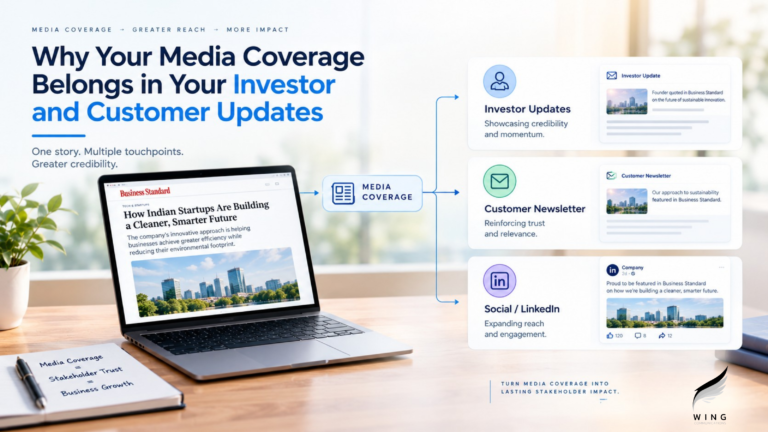
Most companies treat media coverage as a one-time asset — a link shared on LinkedIn, maybe added to a website’s “in the news” page, and then forgotten. Meanwhile, the same company sends monthly investor updates and customer newsletters that rarely reference the coverage at all. That’s a missed opportunity. Earned media doesn’t just build external credibility — it’s some of the strongest content a company already has sitting unused in its own stakeholder communications.

Why This Gap Exists

PR and email communications are usually run by different people, sometimes different teams entirely, with no real handoff between them. A founder secures a feature in a business publication, the PR team reports it as a placement win, and the story ends there. Nobody loops it into the investor update going out three weeks later, or the customer newsletter that could use exactly this kind of third-party validation. The coverage exists, but it never reaches the audiences who’d find it most persuasive.

Why Media Coverage Belongs in Investor Updates Specifically

Investors — current and prospective — read updates looking for signals of momentum and credibility, not just metrics. A line in a monthly update noting that the founder was quoted in Mint on an industry trend, or that the company was featured in a Business Standard piece on sector consolidation, does something a growth chart alone can’t: it shows the company is being recognized by an independent, credible third party, not just reporting its own numbers.

This matters more ahead of a funding round. Investors doing diligence often search a company’s name before a first meeting. A founder who’s proactively surfaced relevant coverage in prior updates has already shaped part of that research — rather than leaving an investor to stumble on it cold, or not find it at all.

Why It Belongs in Customer Communications Too

For B2B companies particularly, a customer newsletter that references credible third-party coverage — a founder’s byline on an industry challenge, a feature explaining the company’s approach to a known problem — reinforces trust in a way product updates alone don’t. Customers renewing a contract or considering an upsell respond differently to “our founder was recently featured discussing this exact challenge” than to another feature announcement.

This doesn’t mean turning every email into a press digest. It means treating genuinely relevant coverage as legitimate content, worth a line or a short section, rather than something that only lives on a website’s press page. Effective email newsletter writing can help keep these updates relevant and useful to their intended audience.

How to Actually Do This Well

Be selective, not exhaustive. Not every piece of coverage belongs in every update. A wire syndication pickup with limited editorial substance isn’t worth including. A genuine feature, a founder byline, or a credible quote placement usually is. Curating rather than listing everything keeps the update credible instead of cluttered.

Frame it for the reader, not the company. Rather than “we were featured in X,” a stronger frame connects the coverage to something the reader cares about — “here’s how [publication] covered the shift we’ve been building toward,” positioning the coverage as insight the reader benefits from, not just a company win being announced.

Keep the cadence realistic. If coverage is sparse in a given month, it’s fine to skip this section entirely rather than stretching a minor mention to fill space. Forced inclusion undermines the credibility this is meant to build.

Link back to the original source. Beyond the immediate communication value, this reinforces the backlink and referral traffic value of the original coverage — a secondary benefit that compounds when stakeholders click through to the actual publication.

The Broader Point

This is really about recognizing that earned media has a longer useful life than most companies give it credit for. A single piece of coverage can serve a press page, a sales conversation, a LinkedIn post, an investor update, and a customer newsletter — but only if someone is deliberately connecting PR output to the rest of a company’s stakeholder communications, rather than treating PR as a siloed function that stops mattering once the article is published.

Companies that do this well tend to get more return from the same volume of coverage than companies generating just as much media attention but leaving it stranded on a press page nobody revisits.

Wing Communications works with founders to think about earned coverage this way — not as an isolated deliverable, but as reusable credibility infrastructure that should show up everywhere a company is already talking to the people who matter most, from investor updates to customer communications. Explore Wing Communications’ thought leadership services and media relations services to learn more about building visibility and credibility through strategic communications.

FAQs

Media coverage provides independent third-party validation of a company’s progress, leadership, and industry relevance. Including credible press mentions in investor updates helps communicate momentum and strengthen investor confidence.

Coverage in reputable publications can demonstrate that a company and its leadership are gaining industry recognition. It can also give investors additional context about the business, market position, and expertise beyond internal performance reports.

Sharing relevant media coverage reinforces credibility and helps customers understand the company’s expertise, industry contributions, and approach to solving business challenges. It adds third-party validation alongside product news and company updates.

Companies should prioritize credible editorial features, founder interviews, expert commentary, and thought leadership articles in relevant publications. Coverage should be useful to the intended audience rather than included simply to increase the number of press mentions.

Contact WingComm today to schedule a free strategy consultation and discover the right PR mix for your business.

Why Your Media Coverage Belongs in Your Investor and Customer Updates Read More »